Most of Chennai’s rain arrives with the northeast monsoon, from October to December. For dogs, that means wet walks, muddy streets and paws that never quite dry. Wet paws are easy to ignore, but they’re where many monsoon problems start. The fix is simple: a two-minute routine at the door, every time.
Why wet paws cause trouble
- Damp between the toes. Moisture trapped between the toes and pads is perfect for yeast and fungus. Watch for redness, a musty smell, or your dog licking and chewing their feet.
- Soft, sore pads. Pads that stay wet soften and can crack or get cut on debris hidden in puddles.
- Dirty water. Stagnant and flood water can carry bacteria, including the ones that cause leptospirosis. Ask your vet whether your dog’s vaccinations cover it.
- More ticks and fleas. Warm, damp weather suits them, and wet fur makes them harder to spot.
The two-minute after-walk routine
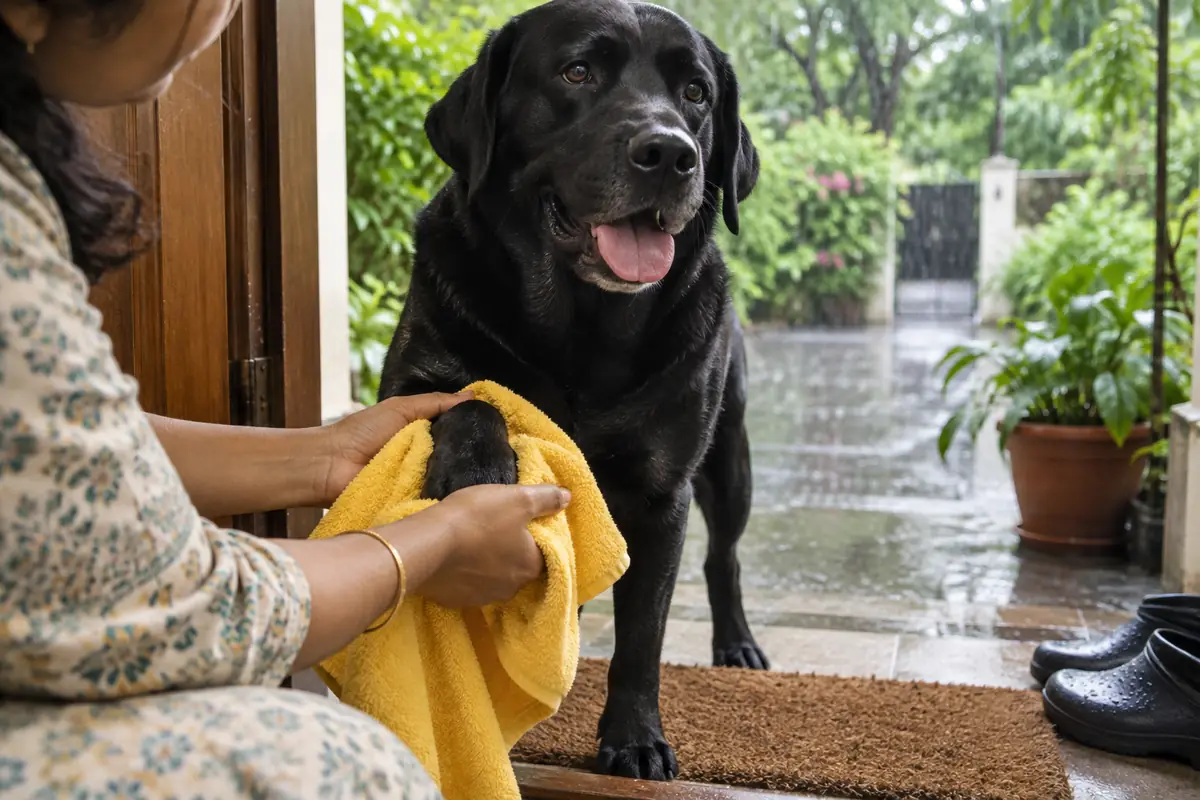
Keep an old towel and a small basin of clean water by the door, so the routine is easy to stick to:
- Rinse or wipe each paw with clean water, working between the toes, not just the pads.
- Dry thoroughly, especially between the toes and around the pads. For long-haired dogs, a dryer on a cool setting, held at a distance and kept moving, helps if your dog is comfortable with it.
- Check the pads for cuts, thorns, ticks or anything stuck between the toes.
- Dry the legs and belly too. They pick up as much splash as the paws do.
That’s it. Done after every walk, this simple habit helps keep paws clean and may reduce monsoon-related paw problems.
Keep paw fur and nails short
Long fur between the pads holds water and mud for hours. Keeping it trimmed short means paws dry faster and stay cleaner. Short nails also help your dog grip wet, slippery floors and steps. Nail trimming is included from Basic Grooming up, and paw-pad trimming from Full Grooming up. You can also add a nail trim to an Essential Bath.
Stay ahead of ticks and fleas
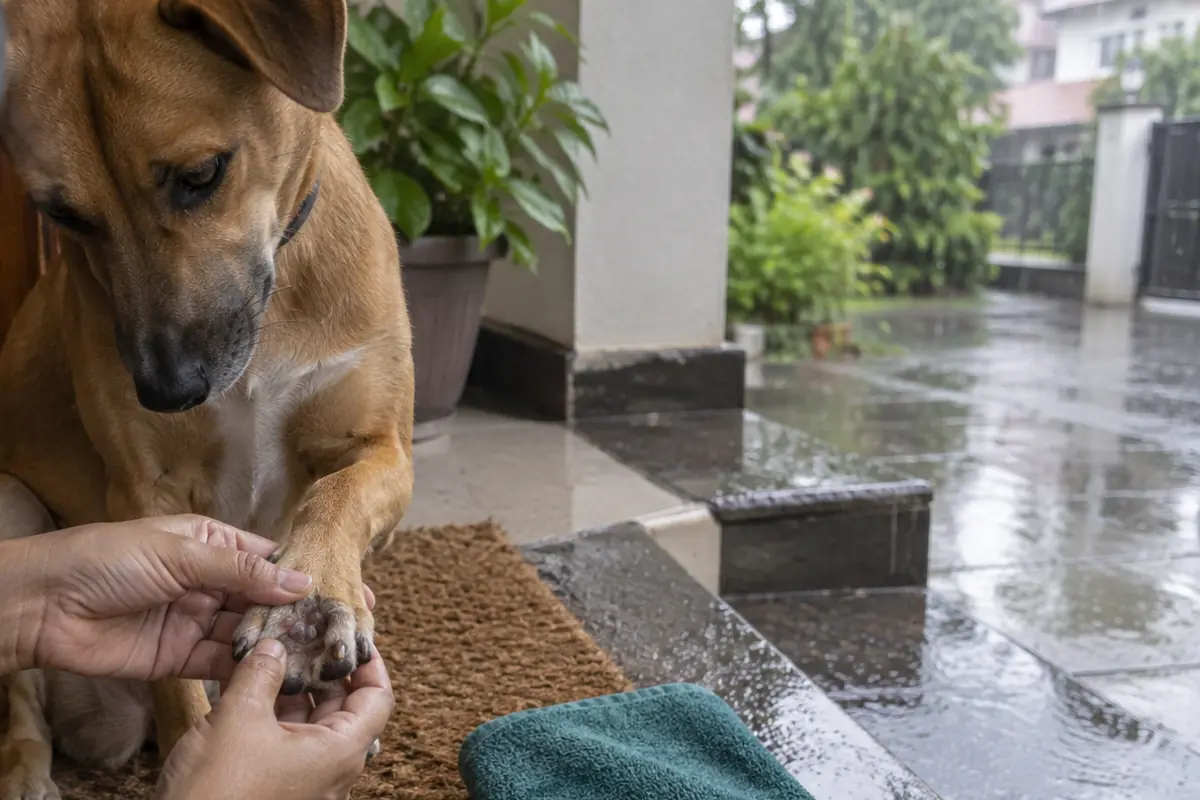
Check your dog every day during the rains: behind the ears, around the collar, in the armpits and between the toes. Use the tick and flea prevention your vet recommends, and keep it on schedule.
If your dog does pick up ticks or fleas, add our tick and flea bath to any package. It removes them on the day, and we deep-clean the van afterwards. It doesn’t replace your vet’s prevention, but it’s a good reset.
Walking in heavy rain
- Avoid flooded streets and stagnant water, and don’t let your dog drink from puddles.
- Go out between showers for shorter, more frequent walks.
- Be visible. Evenings get dark early on rainy days, so a reflective collar or leash helps.
- Play indoors on the wettest days: fetch in the hallway, a snuffle mat, or hide-and-seek with treats keeps them busy.
Grooming during the monsoon
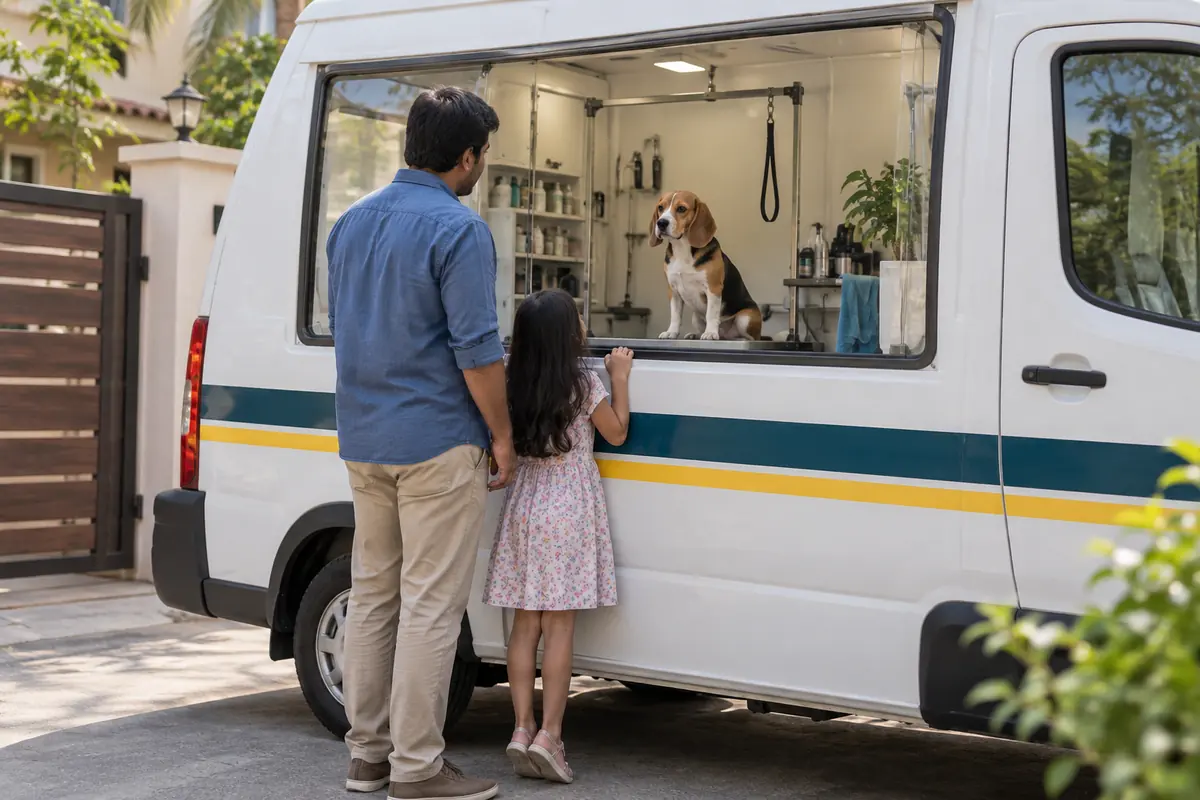
The groom happens inside our van, so light rain is no problem. Your pet is fully dried before they go back to you, which matters more than ever in damp weather. In heavy rain, on waterlogged streets, or when there’s a storm warning, we may move your slot for everyone’s safety. We’ll message you as early as possible, and rescheduling for rain is always free.
When to see a vet
Call your vet if you notice:
- red, swollen or smelly paws, or constant licking;
- limping, or a cut that doesn’t heal;
- signs of tick-borne illness, such as fever, low energy or loss of appetite.
See all options on Services and prices.
This article is general guidance, not veterinary advice. If your dog has a health concern, please check with your vet.